
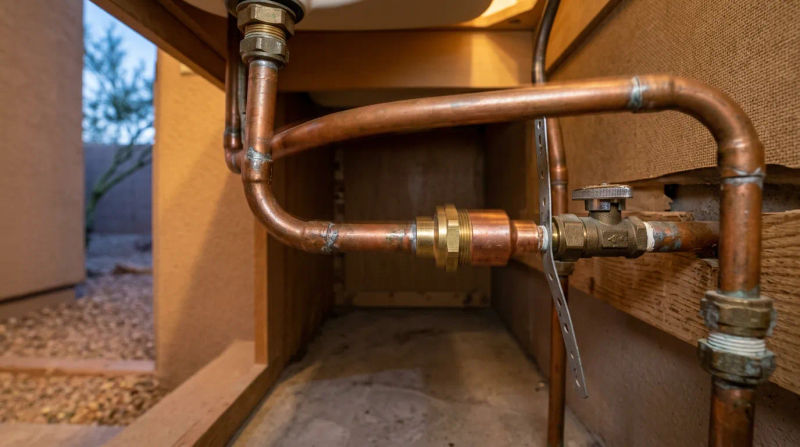
It’s a quiet evening in Vail. The day is finally winding down, the cooler September air is a welcome relief, and the house is settling in for the night. You’ve just finished the dishes or flushed a toilet, and suddenly - BAM! A loud, jarring bang echoes from inside a wall, startling everyone. If this sounds familiar, you're not alone. My team and I get calls about this all the time. That startling noise is often a plumbing issue known as “water hammer,” and while it might just seem like an annoyance, it can be a sign of a more serious problem brewing in your pipes.
That sudden bang is the sound of a powerful shockwave reverberating through your plumbing system. Over time, these repeated shocks can damage pipe joints, loosen fittings, and even cause catastrophic leaks. In this article, I'll walk you through how to identify the signs of water hammer, understand what's causing it in your home, and know when it's time to call for a professional diagnosis and water hammer repair.
Common Signs and Symptoms
That loud bang is the most obvious symptom, but water hammer can manifest in several ways. The more you can tell a professional about what you're hearing and seeing, the faster they can pinpoint the source. Here are the most common signs my team and I encounter on service calls.
- A Single, Loud Bang: This is the classic water hammer sound. It happens almost immediately after a valve closes quickly. The biggest culprits are modern appliances like washing machines, dishwashers, and even some toilets with fast-filling valves. The water is flowing at high speed, and when the valve slams shut, the water has nowhere to go, causing a pressure spike and that signature bang.
- Shuddering or Vibrating Pipes: Sometimes, instead of a single bang, you’ll hear a rattling or shaking sound that seems to travel through the walls or floor. This often happens in homes with long, straight pipe runs, which are common in many of the master-planned communities in Vail built in the 1990s and 2000s. The shockwave vibrates the pipe, and if it isn't securely strapped inside the wall, it will rattle against the wood framing.
- Pipes Banging at Night in Vail: We get a lot of calls specifically about pipes banging at night Vail. This isn't because the problem is worse at night, but because your home is quieter. Without the background noise of the day, that sudden bang from the irrigation system shutting off or a late-night toilet flush is much more noticeable and alarming. The cooler night air can also cause pipes to contract slightly, which can sometimes amplify these sounds.
- A Series of Rapid Thuds: Does the sound resemble a quick, stuttering machine gun? This is often caused by valves that flutter as they close, like those in a sprinkler system or a faulty toilet fill valve. Each flutter creates a smaller shockwave, resulting in a rapid series of bangs.
- Sputtering Faucets: If your faucets spit and sputter when you first turn them on, it can indicate air in your plumbing lines. While not directly water hammer, it can be related to the same pressure issues or indicate a problem with your system's air chambers, which are designed to prevent water hammer.
- Visible Drips or Leaks: This is the most serious sign. The intense pressure spikes from water hammer can be incredibly forceful - sometimes exceeding 1,000 PSI. This stress can weaken solder joints in copper pipes and stretch the fittings on PEX tubing over time, eventually causing small drips or even a full-blown burst pipe. If you see moisture on a wall or a puddle near an appliance, it's a clear signal to act immediately.
What Causes This Problem
Understanding the root cause is the key to knowing how to stop water hammer in a house. It’s not just a random noise; it’s a direct result of water physics within your specific plumbing system.
First, water is heavy (about 8.3 pounds per gallon) and it doesn't compress. When it’s flowing through your pipes, it has momentum. When a valve snaps shut, that entire column of moving water crashes to a halt, sending a high-pressure shockwave backward through the pipe. The bang you hear is that shockwave hitting a bend or the pipe itself shaking.
Several factors can cause or worsen this effect:
- High Water Pressure: This is the number one contributor I see in the field. Municipal water pressure in areas like Vail can be high. To combat this, most homes, especially those built in the last few decades, are equipped with a Pressure Reducing Valve (PRV) near the main water shut-off. These bell-shaped devices are designed to keep your home's water pressure at a safe level (typically 50-75 PSI). When a PRV starts to fail, it can let the pressure creep up, significantly increasing the force of a water hammer event. Common pressure reducing valve symptoms Vail homeowners report include loud pipe noises, running toilets, and dripping faucets - all signs of excessive pressure.
- Failed Air Chambers or Arrestors: Homes built in the 1990s and 2000s often used simple air chambers - short, capped-off vertical pipes installed near fixtures. The idea was that the trapped air in the chamber would compress and absorb the shockwave. The problem is, over time, this air gets absorbed into the water, and the chamber becomes waterlogged and useless. Modern water hammer arrestors are much more effective. They contain a piston or diaphragm that permanently separates a pocket of air or gas from the water, providing a reliable cushion. These can also fail, but they are the standard for proper water hammer repair.
- Pipe Layout and Securing: The architectural style of many Vail homes, with their complex rooflines and spread-out floor plans, often necessitates long plumbing runs. The longer the pipe, the more momentum the water builds, leading to a more severe water hammer effect. If the pipes weren't securely strapped to the framing during construction, they're more likely to vibrate and bang.
When to Call a Professional
Some minor pipe noises can be managed with simple adjustments, but water hammer is often a symptom of a larger issue that requires an expert eye.
A simple thing you can try is to slightly close the shut-off valve for the appliance causing the noise (like the one behind your washing machine). This reduces the flow rate, which lessens the momentum and can soften the bang. However, this is more of a temporary patch than a permanent solution.
You should call an experienced professional if:
- The banging is loud, frequent, or getting worse. This indicates a significant pressure issue that is putting constant stress on your plumbing.
- You notice any of the other pressure reducing valve symptoms Vail residents often experience, like running toilets, dripping faucets, or short-lived appliance water heaters.
- You see any signs of a leak. Water damage is expensive and disruptive to repair. Don't wait for a drip to become a flood.
- You suspect your air chambers have failed. Draining your whole system can sometimes recharge old-style air chambers, but it's often a temporary fix. Installing modern, reliable water hammer arrestors is the best long-term solution, and placing them correctly for maximum effect is a job for someone with experience.
When my team investigates a water hammer complaint, our first step is always to put a pressure gauge on the system to get an accurate reading. This tells us immediately if the PRV is failing or if the pressure is too high. From there, we can inspect the plumbing, identify the problem fixtures, and recommend the right solution, whether it's replacing a PRV, installing arrestors, or securing loose pipes.
Conclusion
That startling bang in your walls is more than just a nuisance - it’s your plumbing system's way of telling you it's under stress. While modern appliances and certain home designs can make water hammer more common, it’s not something you have to live with. Ignoring the problem can lead to weakened pipe joints, persistent leaks, and potentially a major pipe failure down the road.
By understanding the common signs and what causes them, you can take the first step toward protecting your home. Pay attention to loud bangs, vibrations, and other symptoms of high pressure. Acting early can prevent a small annoyance from turning into a large, expensive repair.
If you notice any of these signs, contact a local Handyman professional for an inspection. A proper diagnosis can bring peace and quiet back to your home and ensure your plumbing system remains safe and reliable for years to come.